


Designing the future is possible, even when constraints seem to narrow the field. It is with this conviction that we arrived in Marseille for the #101 International Conference of the Trans Europe Halles network. But to tell this story well, we need to start in Sofia, and go back in time to the #99th Conference, about a year earlier.
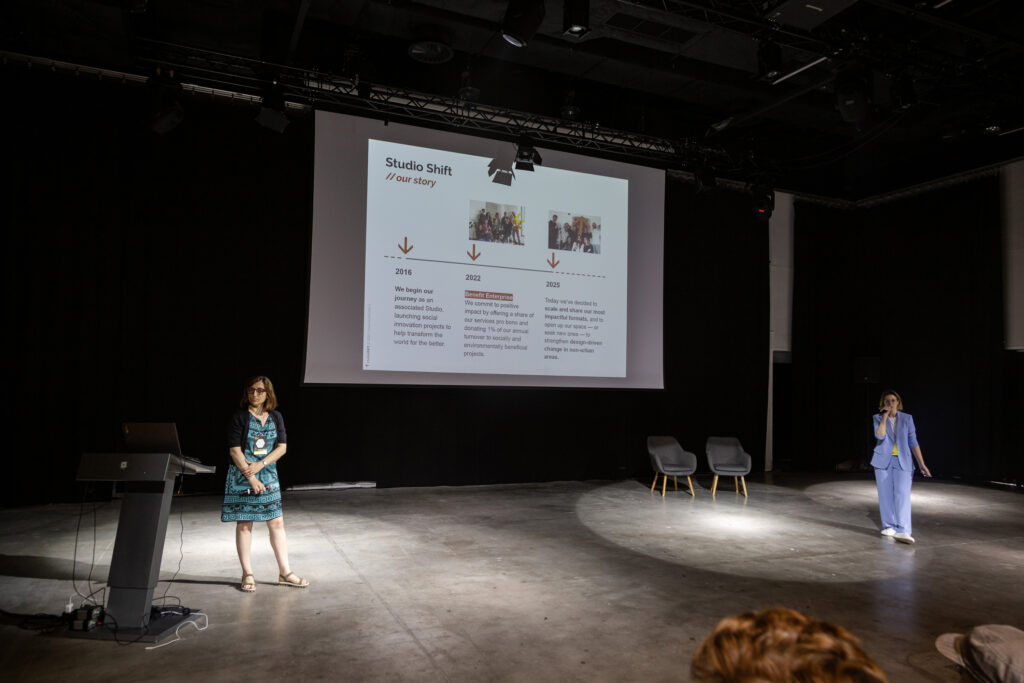
Building desirable futures: Shift with European cultural centres to imagine new trajectoriesIt was 5 June 2025 when our Shifters Elena and Silvia stood up before the audience of the #99 Trans Europe Halles conference in Sofia to present Studio Shift and apply for membership of the network. It is not an emotion you experience every day. For us, TEH is not just a network: it represents a place where our voice, our values and our vision intertwine with a broader conversation made up of people, independent cultural centres and shared practices. In April 2026, in Marseille, we participated officially as an Associate Member. With the same enthusiasm as before, and as practitioners in the ICC field, we presented a future thinking contribution for the benefit of other members.
Culture does not describe the world. It changes it.
Trans Europe Halles was founded in 1983 and today brings together over 100 organisations in more than 30 countries: cultural centres born in disused factories, converted barracks, industrial spaces returned to their communities. Places that have chosen to operate at the margins of institutional circuits to make culture a living, common good, rooted in local territories. What unites the members of this network – and what connects us to it – is the conviction that culture and creativity not only have the power, but also the responsibility, to contribute to change. Independent cultural centres are laboratories of the future: spaces where new ways of being together are experimented, where responses to crises are tested, where community is imagined. Not through top-down solutions, but through open processes rooted in local contexts.
Constraints as a starting point
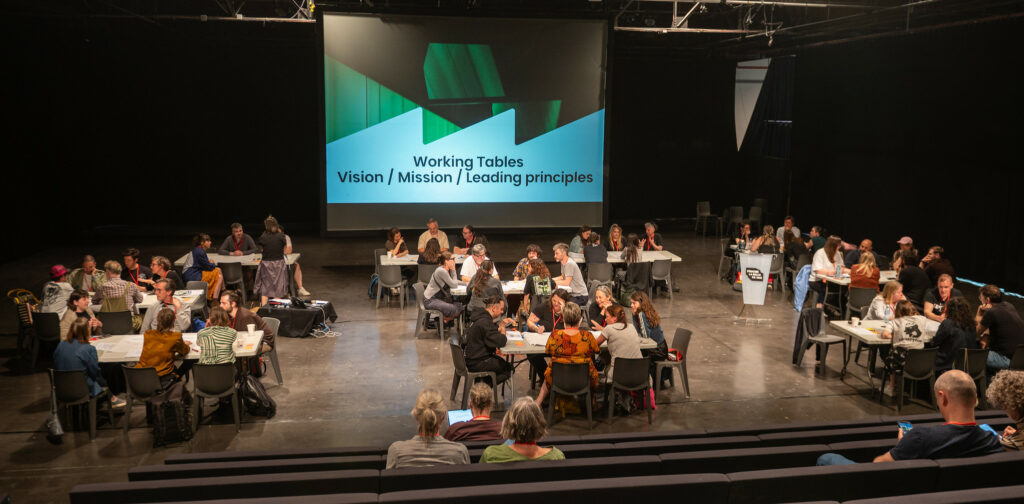
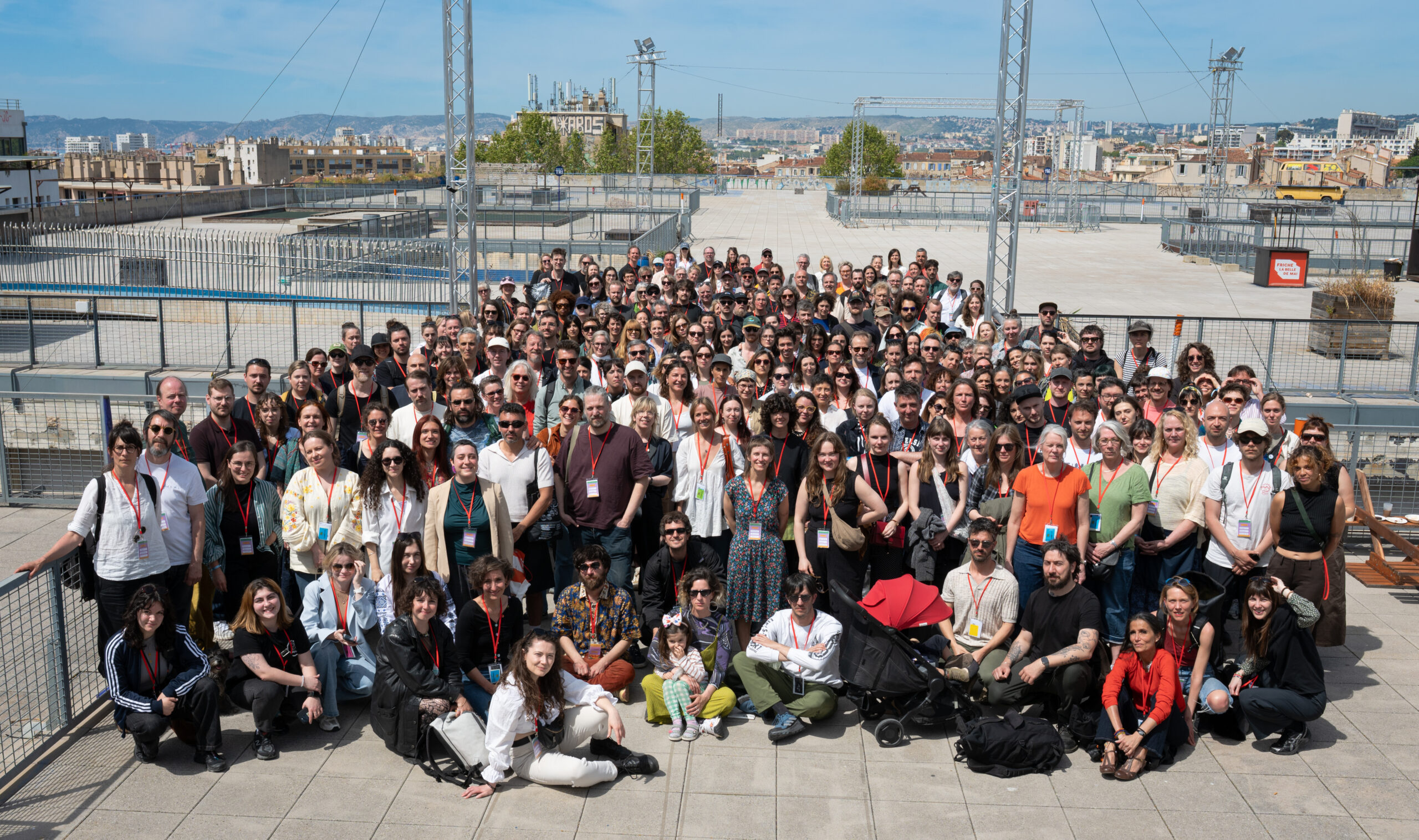
The theme of conference #101 is rooted in this conviction: Imagining Within Limits: Cultural Centres and Planetary Boundaries. Hosted from 16 to 19 April at La Friche — la Belle de Mai in Marseille, a former tobacco factory transformed into a cultural ecosystem housing over 70 organisations, the conference focused on the role of cultural centres in rethinking the relationship between cultural practices and sustainability (social, environmental and economic), asking how we can imagine and build a future within the limits posed by the challenges of our time.
magining within certain limits can feel like a constraint. For us as designers, it is the starting point for good design. Charles Eames said that “the key to the design problem is the designer’s ability to recognise as many constraints as possible, and their willingness and enthusiasm to work within those constraints.” To quote another name dear to design, Walter Gropius, founder of the Bauhaus, said: “the constraint makes the creative mind inventive.”
It is not about designing despite constraints, but thanks to them. Working with constraints is precisely what should inspire designers; it is certainly a continuous exercise for us at Shift: gathering constraints and transforming them into creative trajectories.
Backcasting: designing from the future we want
Our contribution to conference #101 grew directly from this vision of constraint as stimulus. We are living in a deeply unstable moment.
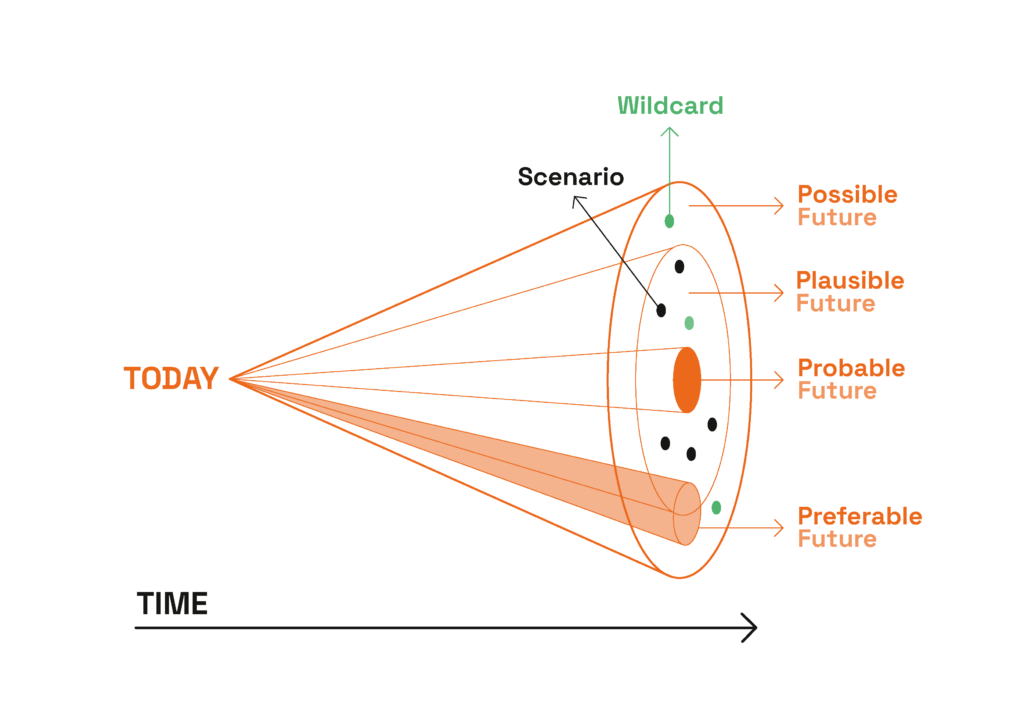
The news describes crisis scenarios, and it is hard not to be pulled towards a defensive position: how to limit the damage, how to resist, how to survive. To offer a different perspective, we facilitated a workshop using the backcasting methodology which, while taking contemporary challenges and emerging trends into account, places our desired futures at the centre. Possible stories.
Instead of starting from the present – where we are often held back by the weight of what is not working – we start from a plausible and desirable future and reconstruct the path backwards to get there. It is a method that allows us to take a positive and proactive stance: shifting the question from “what can we afford to do?” to “what do we want to become?” moves the design focus forward, turning today’s obstacles from insurmountable walls into constraints to move through, in order to reach the future we have imagined and make it possible.
A process towards a desirable future
The workshop began by drawing on a real journey: the collaboration with Cooperativa Il Visconte of Mezzago, the managing organisation of the independent cultural centre Bloom. Starting in 2024, Shift worked alongside Bloom to redesign its strategy through five theory-and-practice workshops, accompanying members and staff on a shared journey of awareness and strategic thinking. Topics covered ranged from rethinking the Vision & Mission to 2050, to defining a five-year action plan, touching on aspects of organisational design, leadership, internal communication and Management 3.0. Building on this initial collaboration, and thanks to our Elena Giunta – CEO of Shift and lecturer at several universities including NABA – Bloom became a case study. Students from the Social Design course at the Nuova Accademia delle Belle Arti worked for six months, following the design thinking method, on five aspirational scenarios co-constructed with Bloom from current trends and challenges:
- The Hub as a Commons – the cultural hub as infrastructure for the common good
- Inclusive Hubs – designing for every body, every story
- Cultural Kitchens – food as a space for knowledge and community
- Hub as a Network Engine – co-designed by the community that inhabits it
- Independent Hubs for Sustainable Futures – autonomy and sustainability as a concrete trajectory
The TEH workshop retraced the essential stages of this collaboration, showcased some of the students’ most significant projects, and – by condensing the process into a hands-on experience for cultural centres across the network – invited participants to reimagine a desirable future for cultural centres and for the TEH network itself.
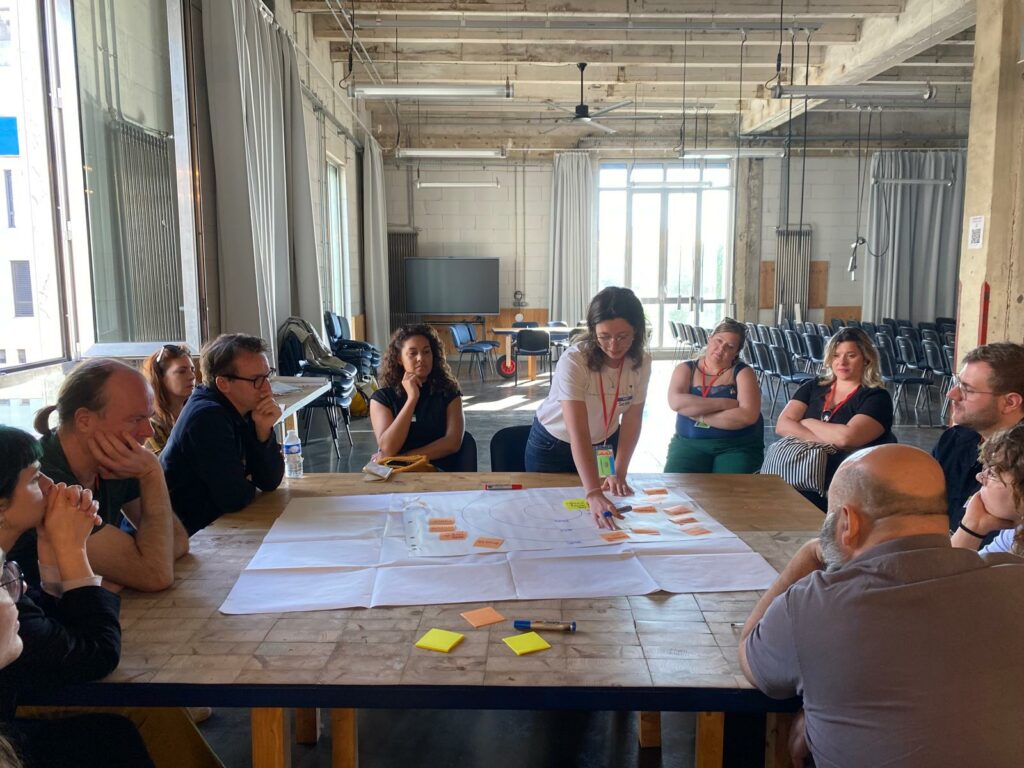
Our wish is to continue bringing this vision to our clients, and to bring ever greater value to the network, in the hope that more and more cultural centres will choose to begin designing their own future, together with their communities.
Silvia Peluzzi – May 19, 2026

Make a Shift is Studio Shift's e-magazine, focused on design and social innovation, where you can find articles and case histories of our projects.
Go to articles