


Many people still have the idea of design in mind that involves a beautiful product, an intuitive interface and an effective campaign. While this is a valid idea, it is only partial. In recent years, meanwhile, design has expanded its remit to encompass something less visible yet equally important: the way an organisation works, makes decisions, communicates internally and evolves over time.
This is not an isolated phenomenon. For at least a decade, management and design literature has openly discussed organisational design and service design applied to internal processes, not just services aimed at end users. In Design When Everybody Designs, Ezio Manzini describes a form of ‘diffuse’ design that activates skills and perspectives within communities and organisations, rather than simply producing closed solutions. On a more practical level, scholars such as Elizabeth Sanders and Pieter Jan Stappers have helped to define co-design as a process in which users collaborate with designers to create a solution, rather than simply receiving it once the work is complete. This represents a subtle yet radical shift in perspective: design is no longer an afterthought, employed merely to make an organisational decision look good; it has become an integral part of the decision-making process itself.
Today’s organisations — including social cooperatives, public bodies, local networks and companies undergoing generational transition — often face the same question: how can they embrace change without losing what already works and ensuring that change is more than just an idea? Design demonstrates its most concrete value here, not as an aesthetic tool, but as a method for bringing implicit needs to the surface, making tensions between different levels of an organisation visible and transforming scattered insights into shared tools.
Making Change Last
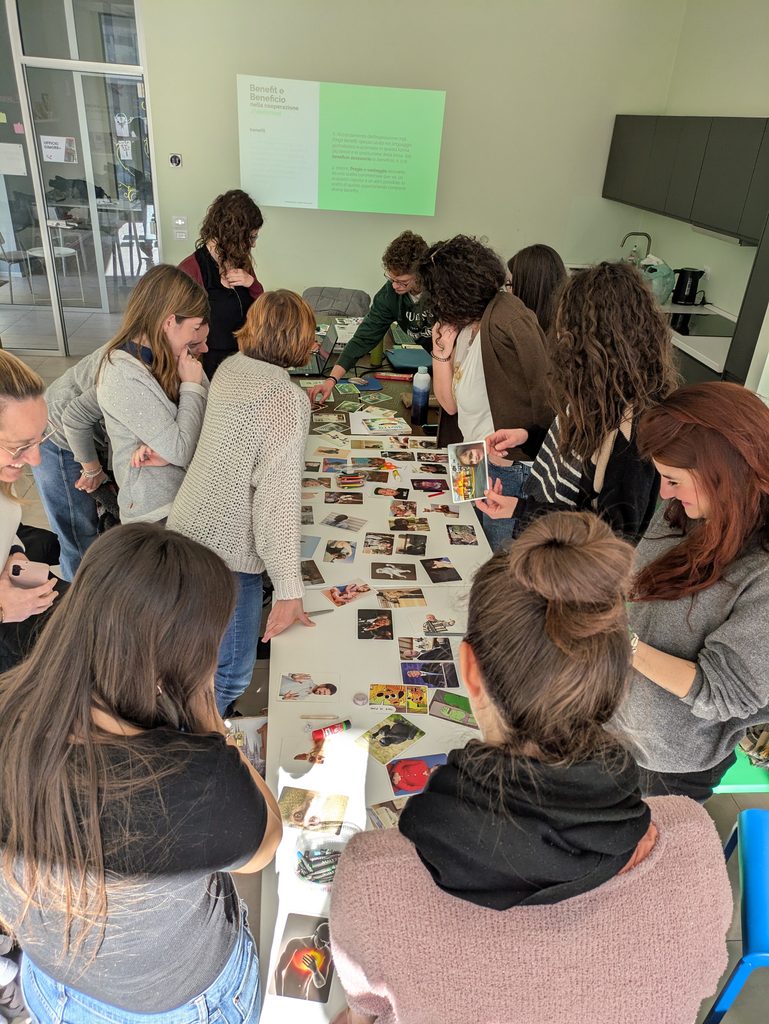
An interesting example from our work at Studio Shift is the New Wave project, which we developed with the social cooperative Il Pugno Aperto. This organisation has more than 200 employees and a history spanning thirty years. The challenge was generational renewal, which was at risk of being treated simply as a staffing issue. Rather than proposing a ready-made solution, we developed a five-session co-design process involving younger employees from the outset. They were not treated as subjects of a top-down plan, but as a direct source of insights into their experiences of work, their expectations and what makes an organisation an attractive place to work. This process resulted in tangible tools, such as the ‘Non ha Prezzo Manifesto’ (‘Priceless Manifesto’), which was designed to make non-financial benefits more concrete, as well as an implementation plan that was promoted by the under-35s group and subsequently shared with the entire cooperative.
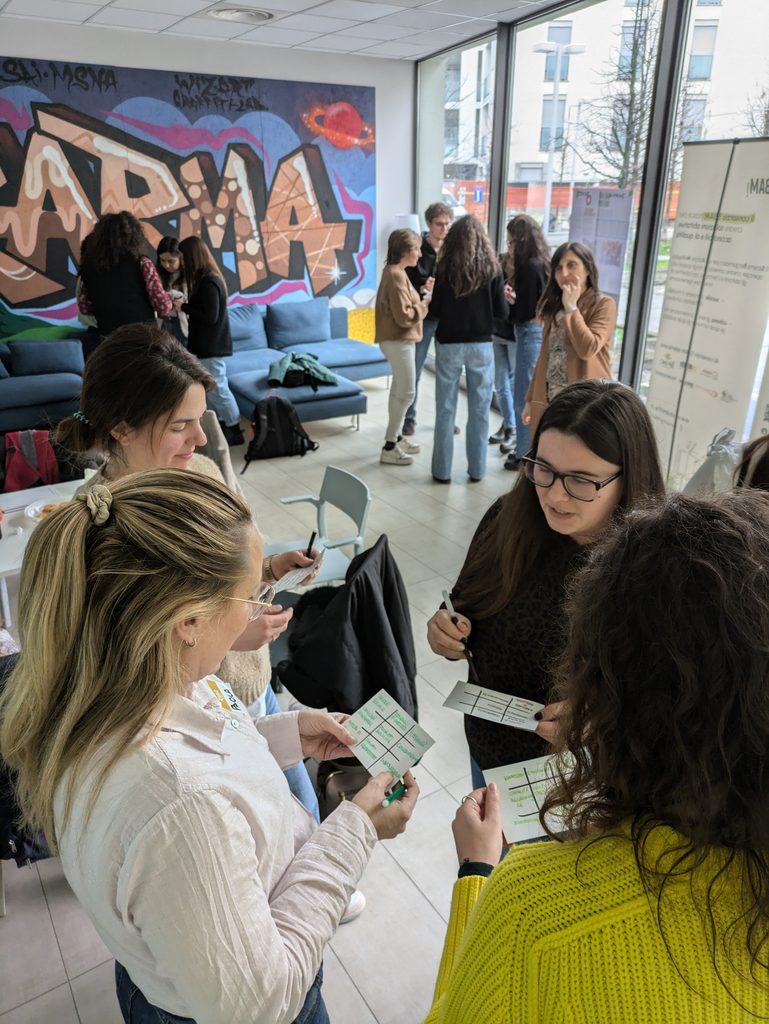
New Wave – Cooperativa Il Pugno Aperto
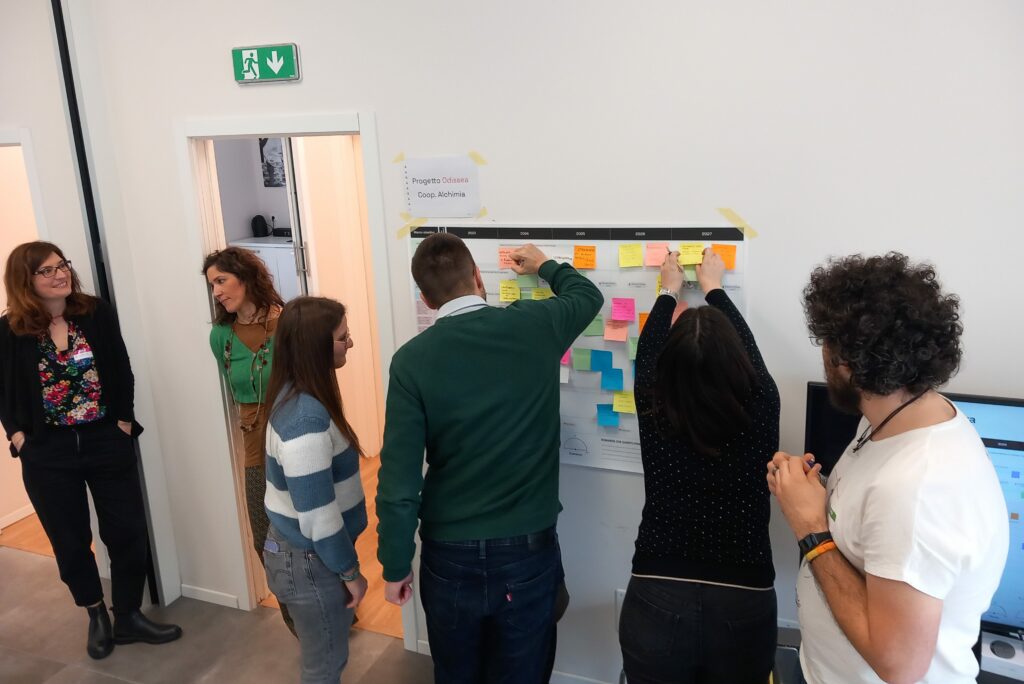
Similarly, TAG35, developed for the Alchimia cooperative, focused on generational onboarding. This involved participatory workshops for the current and future leadership team, including members and employees under 35, to learn about the principles of Happiness Management and prototype dedicated organisational tools. The aim was to build a more collaborative and motivating workplace culture from the moment people join the organisation.
Navigating Transitions
Other projects demonstrate how adaptable this approach can be to different needs. With EDIT, the capacity-building programme developed for Cooperativa Ruah, co-design resulted in a genuine digital transition plan. This was created in collaboration with the people who would subsequently use the processes every day. It was not software imposed from above, but a tool designed with the people responsible for adopting it in mind. The result was an easy-to-use digital solution capable of collecting, processing and enhancing the organisation’s existing data in a consistent, centralised and accurate way. This helps to communicate a healthy context and processes that create value for people and the environment.
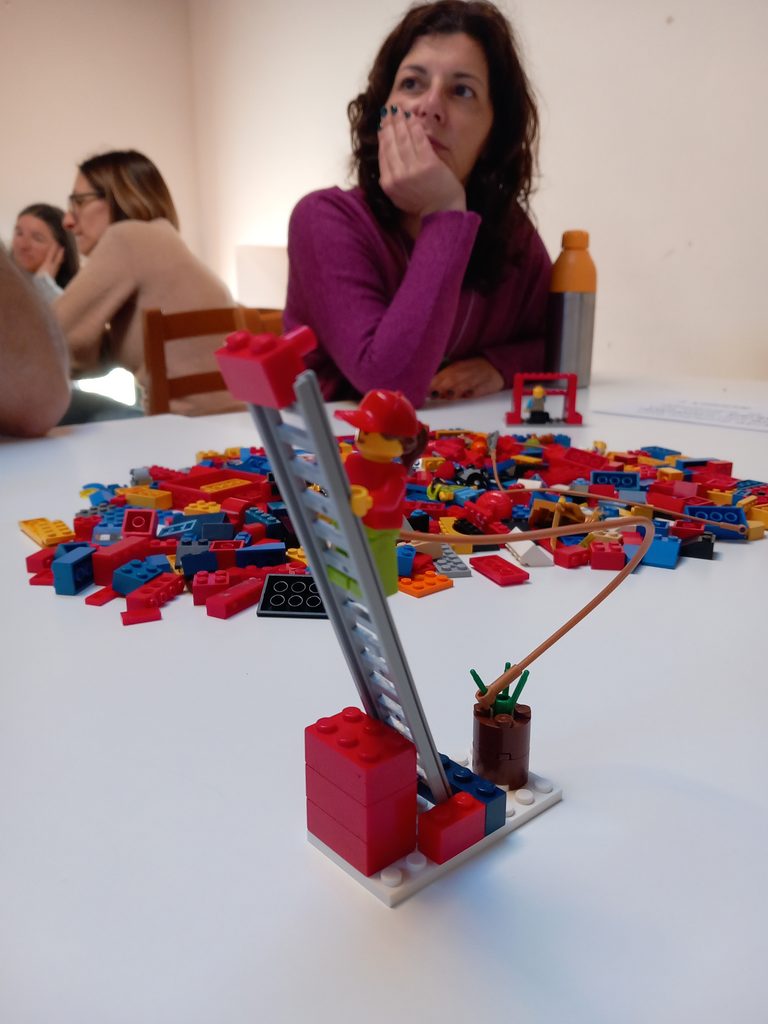
The major transitions we have addressed include digital transformation, the adoption of a stronger ecological focus, and the preservation and growth of healthy business models. In other contexts, we have facilitated transitions in corporate governance at Consorzio CSA Coesi and the consolidation of strategic directions at Consorzio RIBES, Cooperativa ITACA, and Cooperativa GEN Fa. In these projects, the studio combined Voros’ Futures Cones – a backcasting technique – with the LEGO® SERIOUS PLAY® method. The latter emerged in the late 1990s from a collaboration between LEGO and the IMD business school. It uses hands-on construction with LEGO bricks to reveal visions and priorities that often remain implicit or unspoken in traditional meetings, even at the governance level. Our staff are trained and certified in this methodology.
TAG35 – Cooperativa Alchimia
How You Design Matters
At Studio Shift, we believe that the difference lies in creating a design intervention that lasts, rather than one that ends with the final presentation.
Designing for an organisation while remaining outside its actual processes often results in technically sound yet fragile solutions; a change of manager or a shift in priorities can easily undo all the hard work.
Designing with the organisation – involving frontline staff, middle management and leadership in the same process with different roles, but equal rights to contribute – produces something that people recognise as their own. Because they see it as theirs, they are more likely to maintain it after the project has ended. This kind of involvement can be applied at very different levels within an organisation, from people who experience the work on a daily basis – as in the New Wave and TAG35 projects – to governance bodies responsible for reshaping the strategic structure, as in the projects with CSA Coesi and GEN Fa.
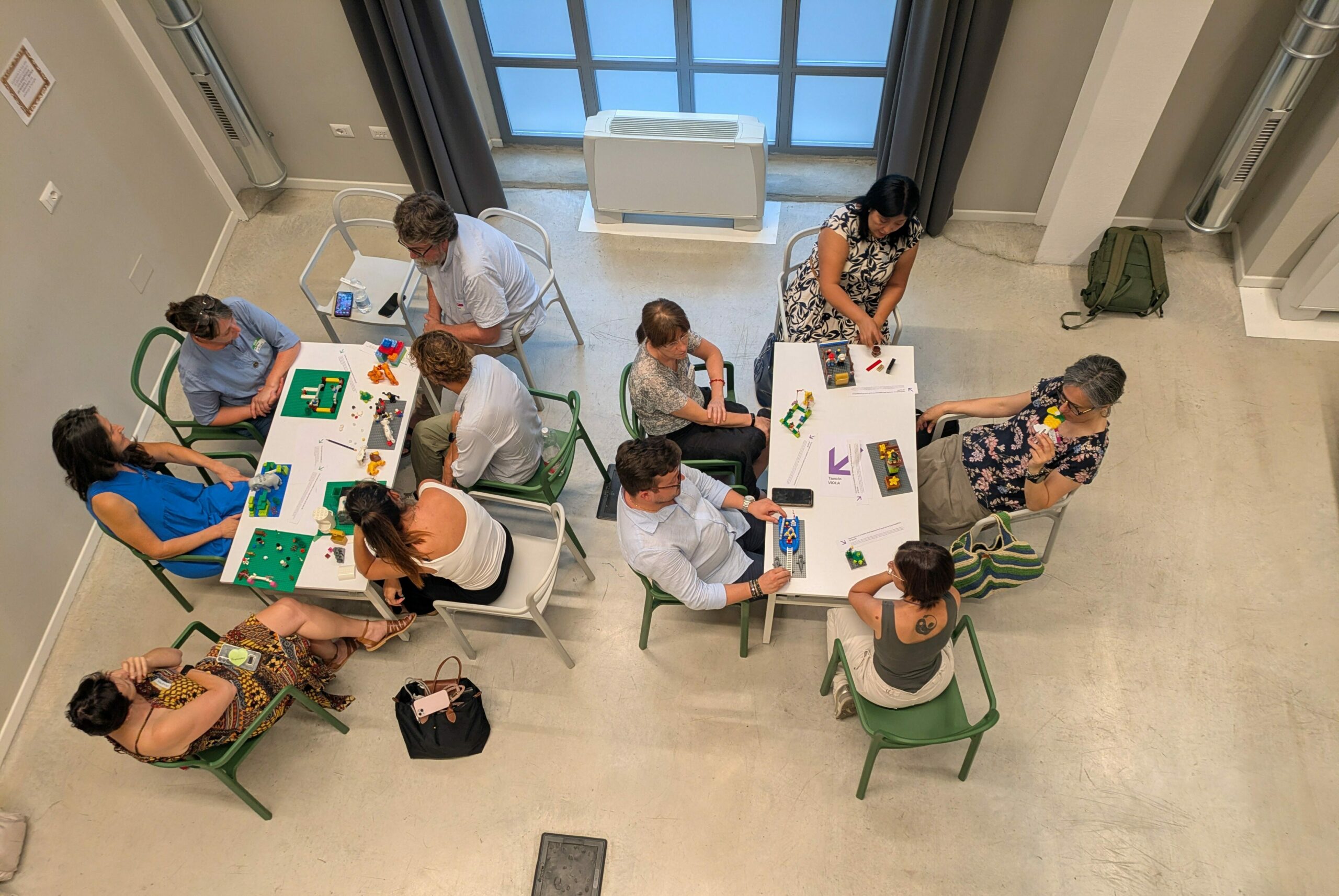
LEGO® SERIOUS PLAY® – Cooperativa Generazioni FA
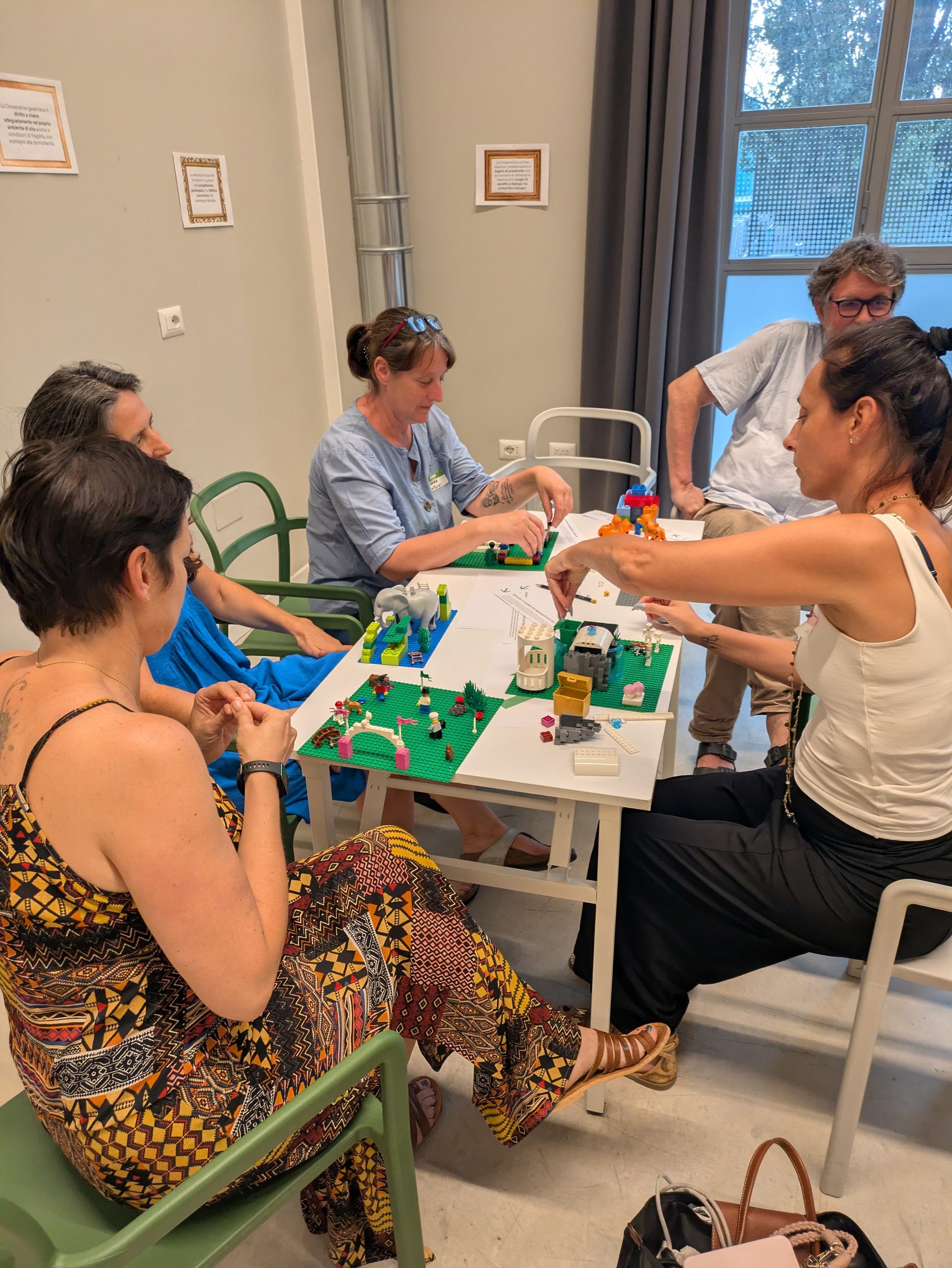
This is not just a methodological detail; it is the condition that enables a solution to become a genuine legacy – something that the organisation can carry forward independently. Donald Schön, the theorist of the ‘reflective practitioner’, observed that useful knowledge in complex contexts can never be transferred entirely from expert to client; it is built together through action.
Ultimately, co-design applied to organisational processes is this principle put into practice – not a method for finding a solution more quickly, but a way of ensuring that, once found, the solution contains the people who will have to implement it.
Design as infrastructure, not just a final touches
Looking at organizational processes through the lens of design therefore means embracing a less visible but more solid idea of what designing means: not the final step before delivery, but the infrastructure that allows change to take root. The organizations now seeking this kind of support — in the third sector, public administration, and companies undergoing transformation — are not necessarily looking for yet another consultancy service. They are looking for a method that leaves behind capabilities, not just outputs.
And this is probably the most mature form design can take: a tool that, when done well, gradually makes itself unnecessary, because the people who have practiced it together have learned how to use it on their own.
Elena Enrica Giunta – September 15 2026

Make a Shift is Studio Shift's e-magazine, focused on design and social innovation, where you can find articles and case histories of our projects.
Go to articles