


For a long time, the term brand has been associated almost exclusively with the business world. A brand is meant to distinguish a product, make it recognisable, create preference, and generate economic value. In our work, this definition appears limited.
In the paper We Are Brand (Giunta, Colombo and Papetti – 2018), a different perspective is proposed: a brand is not an object nor a set of visual elements, but an ecosystem of shared meanings. The concept of brand shifts from a simple visual identity to a system of relationships, meanings, and behaviours. Applied to public administrations, this perspective opens a reflection that goes beyond the institutional logo and concerns the way an organisation builds trust, reputation, and legitimacy through every interaction with citizens, businesses, and communities.
This perspective raises an interesting question: if a brand is, above all, a relationship, can a public administration also be considered a brand?

Rebranding del logo dell’Ambito Territoriale Sociale di Merate
The brand as a collective experience
A brand does not coincide with a logo or a visual identity. It exists primarily in people’s perceptions and in the quality of the interactions they experience with an organisation.
If a brand is the result of the experiences people have with an organisation, then, in the case of public administration, it takes shape far beyond institutional communication tools. A simple administrative procedure, an intuitive digital service, transparent information, the ability to listen or, on the contrary, a complex bureaucratic process all contribute to building the “public brand”.
This vision finds an interesting precedent in the work of Massimo Dolcini and his idea of the grafico condotto (community-based designer). Inspired by the figure of the local doctor or pharmacist (medico condotto and farmacista condotto), Dolcini imagined a designer permanently embedded in the life of communities and institutions, capable of supporting their transformation processes through communication design. His role was not simply to “create posters”, but to interpret collective needs, make public policies accessible, and foster citizens’ participation.
From this perspective, graphic design is not the final stage of an administrative process, but a tool for governance and for building the relationship between institutions and communities. Every poster, every sign system, every brochure, every campaign becomes part of a broader ecosystem that contributes to making an administration recognisable, understandable, and closer to people.
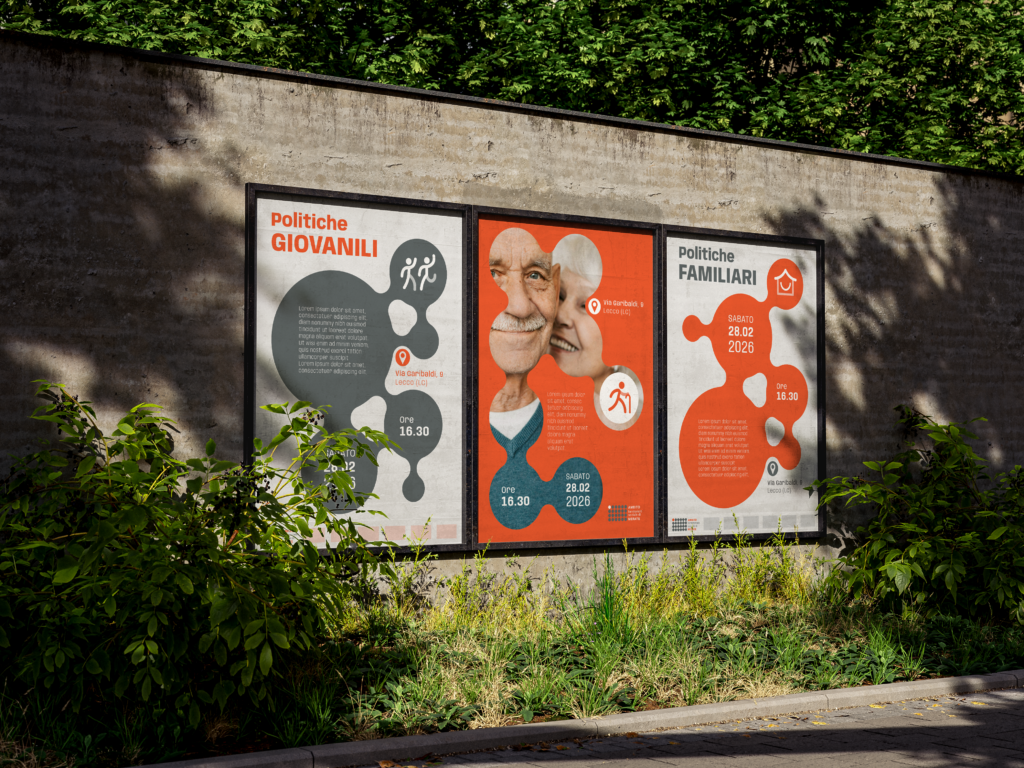
In the private sector, a strong brand generates preference. In the public sector, it produces something even more important: trust. Trust is a strategic resource for any administration. It influences citizens’ willingness to collaborate, adopt new digital services, participate in decision-making processes and, more broadly, recognise the legitimacy of public action.
From this perspective, public branding is not a marketing activity, but a tool for governing the relationship with the community.
Every touchpoint communicates
The brand of a public administration does not emerge from visual identity alone, but from the consistency between what the institution promises, what it communicates, and what citizens concretely experience through services and public spaces. It is with this premise that, last year, the participatory reconstruction of the branding strategy for the Merate Social District began. The Merate Territorial Social Area brings together twenty-four municipalities in the province of Lecco — Airuno, Brivio, Calco, Cernusco Lombardone, Imbersago, La Valletta Brianza, Lomagna, Merate, Montevecchia, Olgiate Molgora, Osnago, Paderno d’Adda, Robbiate, Santa Maria Hoè, Verderio and the other municipalities belonging to the District — coordinating social policies for a territory of approximately 119,000 inhabitants.
The core activity of the District is not the direct delivery of individual services, but something deeper and often less visible: designing, coordinating, funding, and innovating public policies that allow services to exist and evolve. The District builds networks between municipalities, Third Sector organisations, and local stakeholders; manages the allocation of resources according to principles of fairness; promotes access conditions that reduce inequalities; and supports the transformation of local welfare towards more inclusive and participatory models.
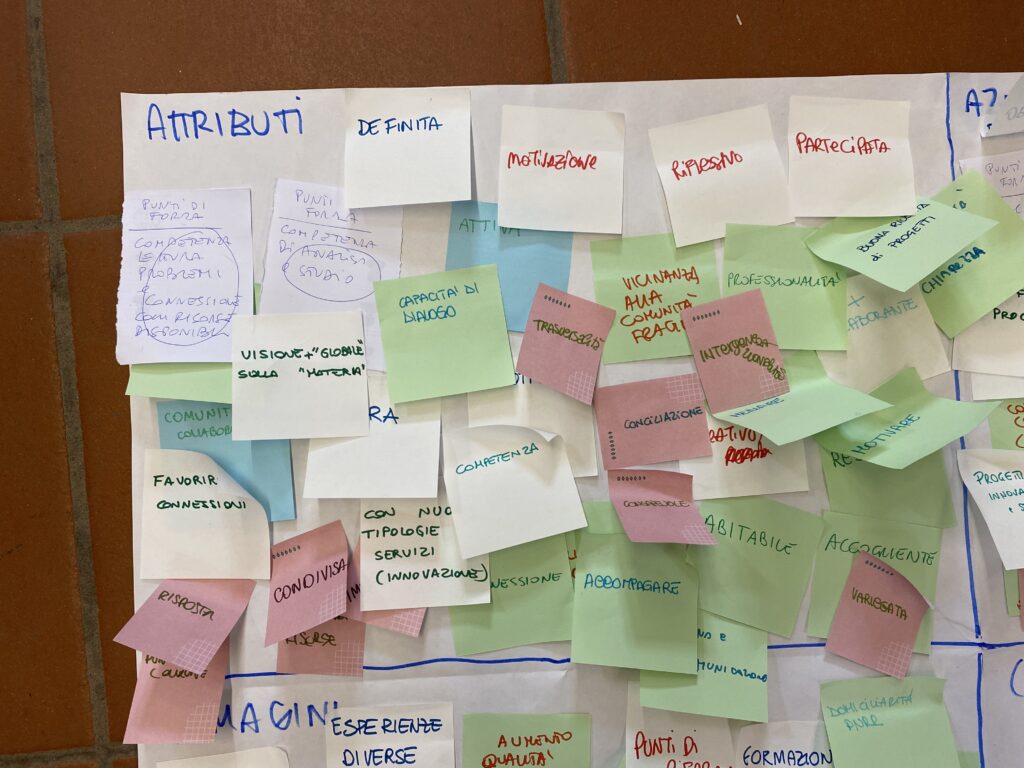
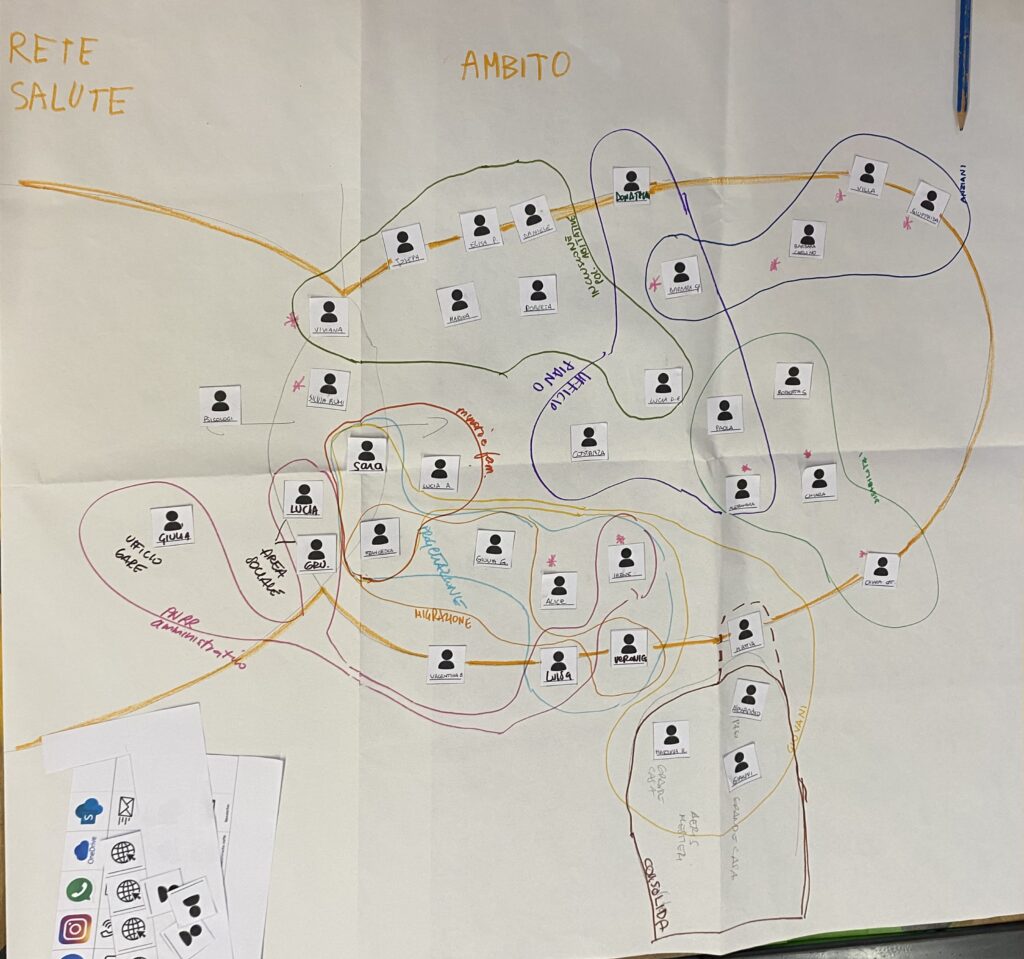
As happens in many public administrations, the daily work of the District generates value without necessarily making it recognisable. Policies become services, services become experiences for citizens, but the system of relationships, skills, and projects that makes all of this possible often remains invisible. One of the most relevant insights from contemporary brand thinking is that every touchpoint communicates.
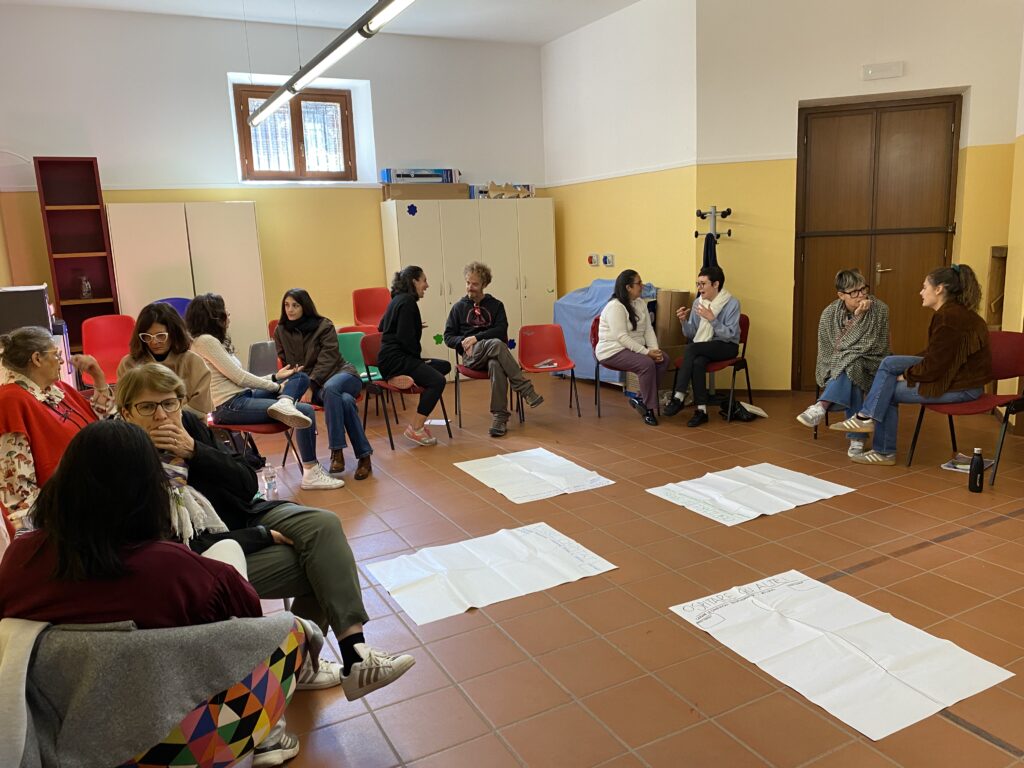
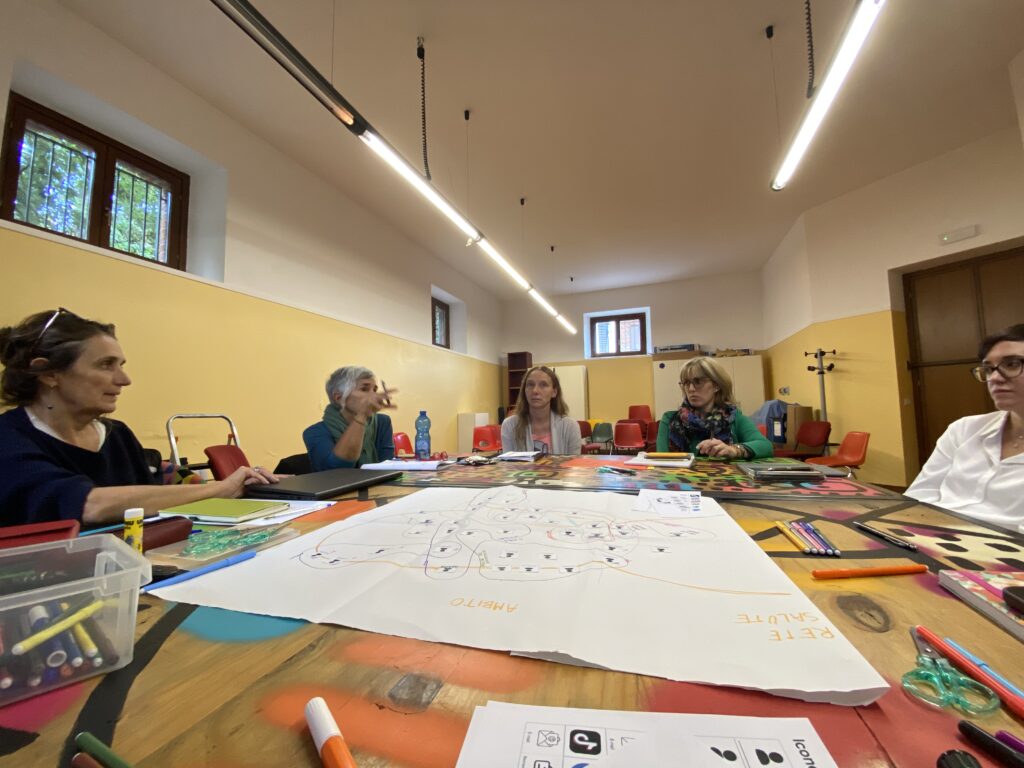
Studio Shift’s intervention started precisely from this need: not to create a new image from scratch, but to organise and give visibility to an existing heritage of activities, relationships, and meanings. Training activities with and for the staff were developed alongside professional work on a cross-channel communication strategy and on specific communication artefacts. The touchpoints to redesign were numerous: the institutional website, digital services, written communications, social media, reporting tools, newsletters, and employees’ behaviours. Every interaction either confirms or contradicts the implicit promise of an institution — which is why branding involves the entire organisation.
A challenge for contemporary public administration
For public administrations, this may be the most important lesson: reputation is not built by simply communicating who you are, but by designing and delivering experiences that make visible who you aim to become.
In this sense, the brand of the Merate Social District is not the result of a logo or a graphic system. It is the form that a public policy takes when it finally succeeds in telling its own story, making visible the network of relationships, skills, and actions that every day contributes to building collective wellbeing.
A concrete example of how design can make the public value generated by an administration visible.
Elena Enrica Giunta – July 23, 2026

Make a Shift is Studio Shift's e-magazine, focused on design and social innovation, where you can find articles and case histories of our projects.
Go to articles