


When we take a photograph, we do not simply record what is in front of us. We choose where to look, what to focus on and what to leave at the edges. We can zoom in on a detail, widen the frame or change our perspective. Each choice reveals a different part of what we are observing.
The same is true when monitoring a project: we are faced with similar choices. What do we want to observe? Which signals can help us understand what is changing? Whose perspectives do we need to listen to? The way we frame these questions shapes what we collect and, consequently, how we interpret the project.
Just as different camera models have different features, project monitoring can also draw on a range of approaches. At Shift, we use design approaches and methodologies as lenses through which to observe projects and build a picture of change (and impact).
Framing the Picture: Design for Planning
A project unfolds over time, taking shape through a variety of activities, people, relationships and conditions that may change along the way. Monitoring a project therefore does not mean waiting until the end to check whether planned activities have been carried out or objectives achieved. Instead, it means observing what happens as the project develops, gathering emerging insights and relating them to what we set out to do.
Through design, we can develop an approach to monitoring that goes beyond simply collecting information. It also considers how that information can be gathered, interpreted, connected and communicated. This is why, before embarking on desk or field research ( developing questionnaires, conducting interviews or defining indicators) we first ask ourselves, and our clients and/or partners, what they want to observe.
This is an important step, allowing us to turn project objectives into questions that monitoring can help answer. Participatory design, in particular, enables us to identify priorities, needs, objectives and expectations together with the people who know the project and are responsible for delivering it.
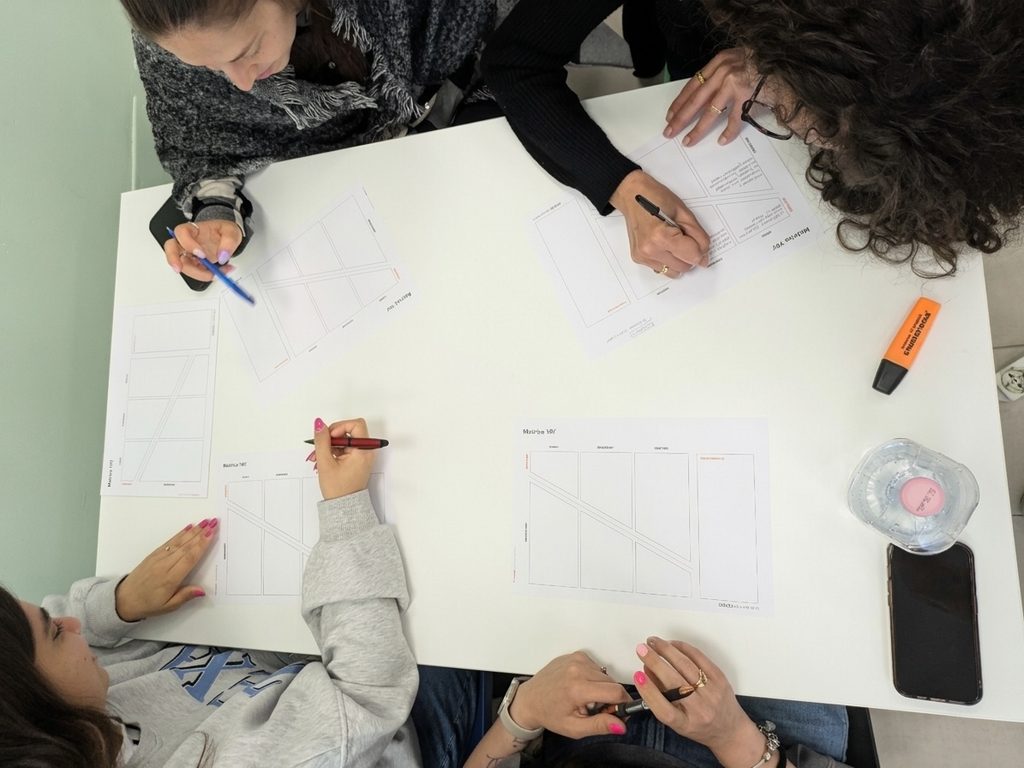
One of our recent experiences in this area is the monitoring of Meglio Prima, a multi-year project led by the social cooperative Il Pugno Aperto in Bergamo. The project focuses on early identification and learning needs among children aged 0–6. We began with an assessment involving the project team, through an in-person workshop with project leads and practitioners (including educational specialists, social workers and psychologists) involved in delivering the programme.
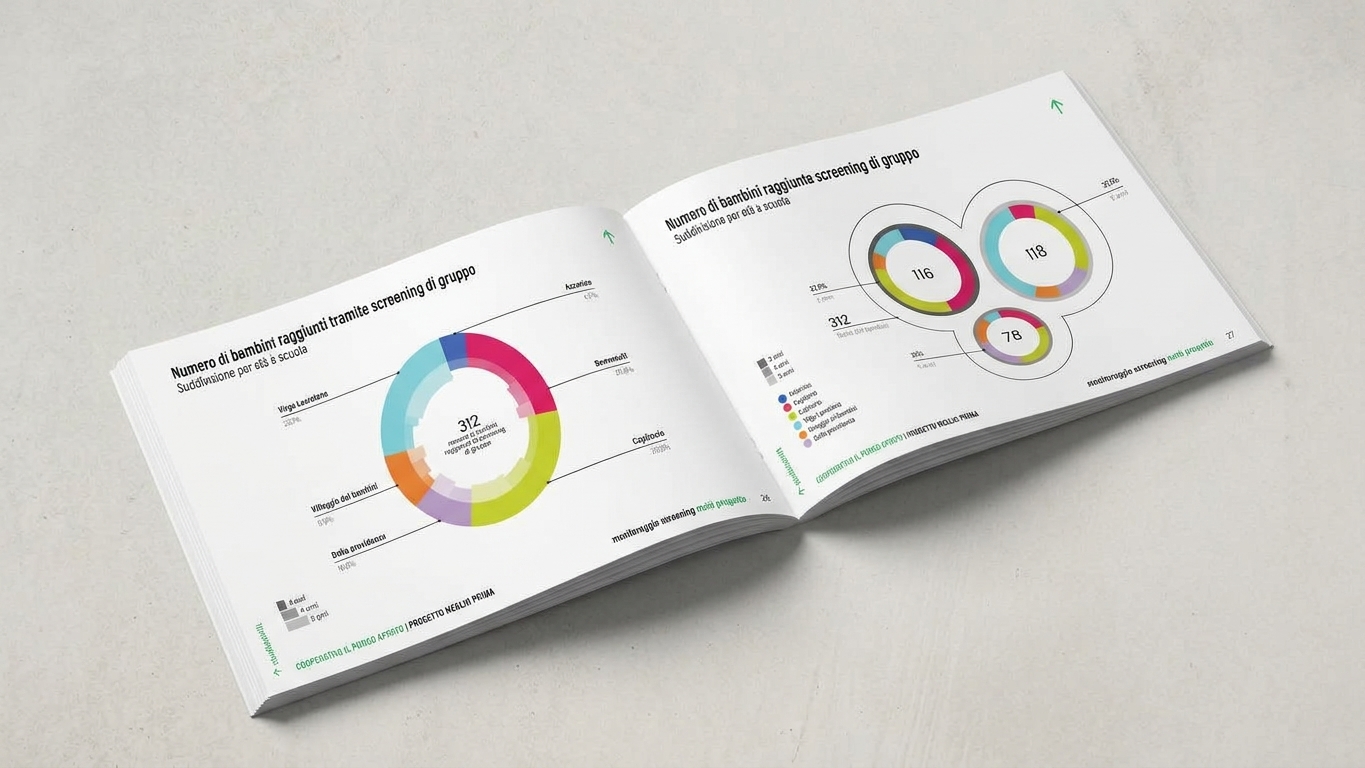
Building on the elements already identified, we worked together to understand the team’s priorities, interests and the aspects of the project that were worth examining more closely. This enabled us to develop an ecosystem of indicators, complementing the metrics already established and required by the funder, Fondazione Cariplo’s Attenta-Mente funding programme. The additional indicators helped us capture the aspects the team considered important and had collectively agreed to explore.
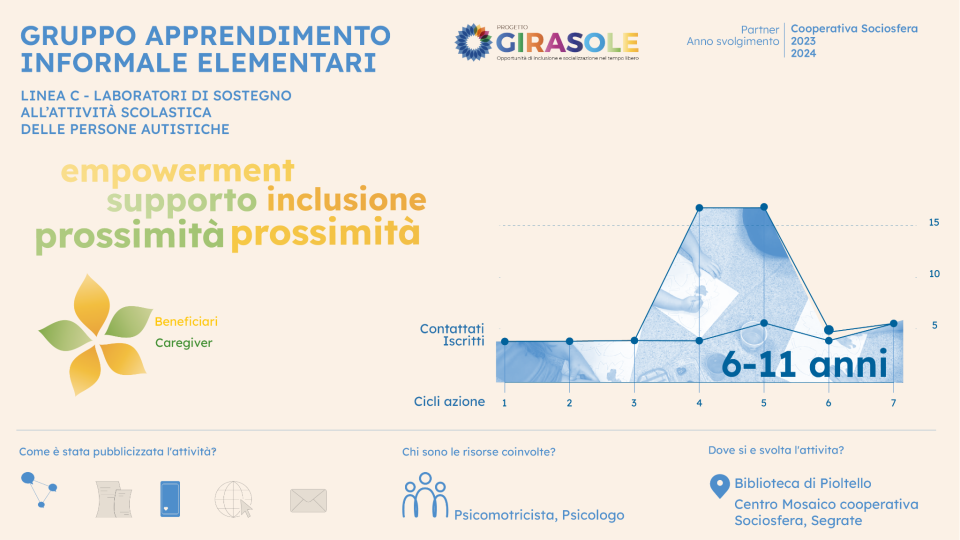
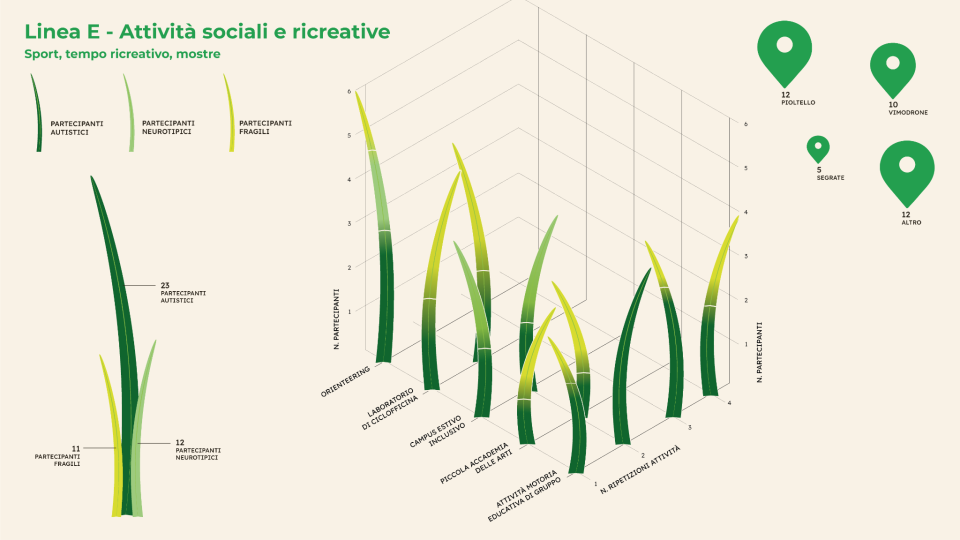
A similar approach was adopted for the Girasole project, delivered as part of the Lombardy Regional Authority’s Fund for the Inclusion of Persons with Disabilities (Law No. 69 of 21 May 2021 – Regional Government Resolution No. XI/7504/2022). In this case, our colleague Sara Radice facilitated a series of online workshops. The metrics collected are also the subject of detailed data visualisation work, reinforcing the idea that numbers alone cannot tell the full story of change.
Both workshops served a specific purpose: to develop a shared perspective on the project and decide how it should be framed for monitoring.
Changing Perspective: Design for Engagement
In our work, we combine different research methods, selecting the most appropriate tools for the questions we want to answer.
Quantitative data help us understand how much has happened: the metrics and results achieved. Qualitative research, on the other hand, allows us to explore more deeply how people have experienced these changes, the challenges they have encountered, their perceptions and the effects of the project, including those that were not anticipated. Design informs the way we plan the research process and, in some cases, the research tools themselves. It helps us build bridges that encourage people to express themselves and bring different perspectives to the surface.
In interviews, for example, we can complement questions with visual prompts such as images, cards or objects. These provide a starting point for people to describe their experiences beyond words alone. This more participatory approach allows them to express perceptions, associations and meanings that might not emerge through a straightforward conversation.
We used this technique in the Girasole project, where it proved essential to engaging with families and their children.
Service design and systemic design approaches allow us to look beyond what happens within a project and explore the relationships that shape it, as well as the wider context in which it operates.
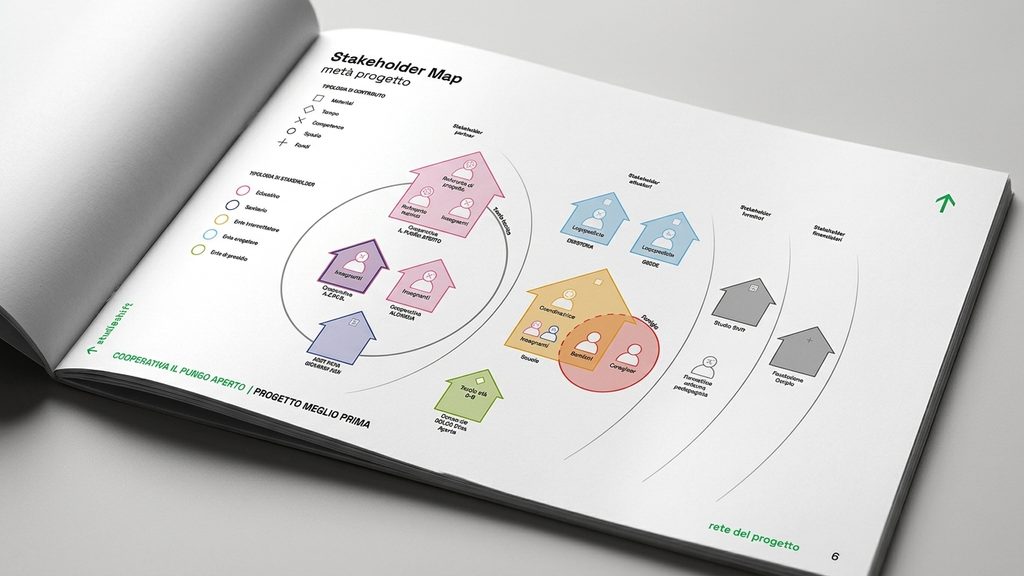
One of the tools we use at Shift to make these changes visible is the stakeholder map. At the beginning of a project, it helps us map the ecosystem of people and organisations involved: who they are, what roles they play and what relationships exist between them. However, its value extends beyond the initial planning stage. Over time, the map can become a monitoring tool in its own right, helping us identify how the ecosystem evolves as the project progresses.
For Meglio Prima, we used a stakeholder map to capture the project’s ecosystem at three different stages: at the beginning, halfway through and at the end. Comparing these three representations allowed us to clearly identify the systemic changes that had taken place throughout the project.
Connecting the Dots: Design for Understanding and Communication
Communication design can play a role in monitoring from the very beginning, acting as a bridge between observation and communication. Knowing what we want to communicate and to whom also helps us determine what to observe and collect, enabling us to build an information system that supports the project’s narrative.
Data visualisations, maps, reports, editorial content, videos and interactive tools can all form part of a communication strategy designed to present a project from different perspectives. They help connect data, evidence and different audiences, with formats and languages selected to suit each context. In this sense, monitoring and communication are not two separate stages. Designing a monitoring process also means creating the conditions needed to tell the story of what happens, deciding from the outset which traces to collect and which stories to bring to light.
In the Girasole project, monitoring informed the production of a range of communication outputs: a set of different tools and materials designed to convey the findings from the monitoring process through different design approaches. We developed these outputs together with the client, starting with the audiences they were intended to reach. The process involved considering which information to communicate, what language to use and which channels to select, choosing the most appropriate format for audiences with different needs and ways of engaging with content.
The result was a set of communication materials tailored to different audiences and designed to make the project’s findings accessible and meaningful.
The Self-Portrait: Design for Reflection
Even when monitoring comes to an end, our work is not quite finished. Drawing once again on participatory design and facilitation more broadly, we can turn our attention inwards, towards the project team, creating a dedicated space to reflect together on what has happened. What worked well? What challenges emerged? How did the team work together? And how have relationships between the people involved changed over time?
In this way, monitoring does not focus solely on the effects produced externally. It also examines the process that enabled the project to develop.
The retrospective thus becomes an opportunity to assess team effectiveness, bring learning and tensions into the open, and turn experience into insights and recommendations that can inform future projects.
Design accompanies the entire monitoring process: from defining what we want to observe to developing research tools; from listening to people and observing the wider ecosystem to interpreting and communicating evidence; and from collective reflection to shaping what comes next.
The aim is not simply to take a snapshot of what has changed, but to create the conditions that allow us to see it.
Silvia Peluzzi and Elena Enrica Giunta – October 27, 2026

Make a Shift is Studio Shift's e-magazine, focused on design and social innovation, where you can find articles and case histories of our projects.
Go to articles